.png)
Complete Guide to Medical Uniforms for Healthcare Professionals
- Rafal Factory

- Jun 5
- 5 min read
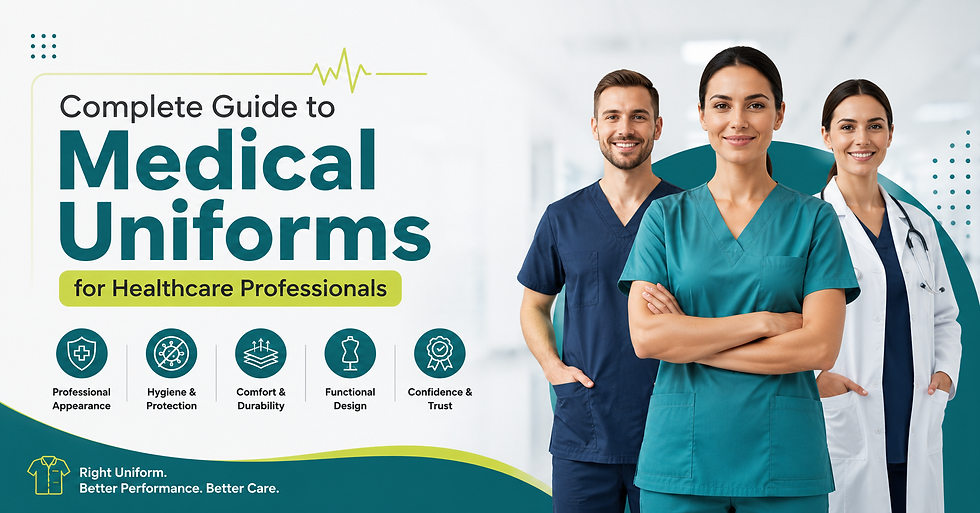
Medical uniforms are an essential part of the healthcare industry. From hospitals and clinics to laboratories and diagnostic centers, healthcare professionals rely on comfortable, durable, and hygienic uniforms to perform their duties effectively. More than just workwear, medical uniforms contribute to patient confidence, workplace safety, infection control, and professional identity.
As healthcare environments continue to evolve, the demand for high-quality medical uniforms has grown significantly. This comprehensive guide explores everything healthcare professionals and healthcare facilities need to know about medical uniforms, including their importance, types, features, benefits, fabric choices, customization options, and maintenance practices.
What Are Medical Uniforms?
Medical uniforms are specially designed garments worn by healthcare professionals during their work. These uniforms are created to provide comfort, functionality, hygiene, and a professional appearance in healthcare settings.
Medical uniforms are commonly worn by:
Doctors
Nurses
Surgeons
Laboratory technicians
Dentists
Pharmacists
Caregivers
Medical assistants
Hospital support staff
Healthcare uniforms are designed to meet the unique demands of medical environments while ensuring ease of movement and long-lasting performance.
Why Medical Uniforms Are Important
Medical uniforms serve several important purposes beyond appearance.
Promoting Professionalism
Uniforms create a consistent and professional image that helps patients easily identify healthcare personnel.
Supporting Hygiene Standards
Medical uniforms are designed to be easily cleaned and sanitized, helping maintain healthcare hygiene requirements.
Enhancing Patient Confidence
Patients often feel more comfortable and secure when healthcare professionals wear clean and professional uniforms.
Improving Staff Identification
Different uniform styles and colors can help distinguish various healthcare roles and departments.
Ensuring Workplace Comfort
Healthcare professionals work long shifts, making comfort and functionality essential.
Types of Medical Uniforms
Healthcare facilities use various types of uniforms depending on job roles and workplace requirements.
Medical Scrubs
Scrubs are among the most common healthcare uniforms.
Benefits include:
Lightweight design
Easy maintenance
Comfortable fit
Freedom of movement
Hygienic appearance
Scrubs are widely used by nurses, doctors, technicians, and support staff.
Doctor Coats
White lab coats remain a symbol of professionalism in healthcare.
Advantages include:
Professional appearance
Additional protection
Easy identification
Storage pockets for tools and equipment
Nursing Uniforms
Modern nursing uniforms are designed to combine comfort, durability, and practicality.
Features often include:
Flexible fabrics
Functional pockets
Breathable materials
Easy-care construction
Surgical Attire
Surgical uniforms are specifically designed for operating rooms.
Characteristics include:
Sterile materials
Specialized designs
Infection control support
Comfortable fit for extended procedures
Laboratory Uniforms
Laboratory personnel require uniforms that provide protection while allowing mobility and comfort.
Key Features of High-Quality Medical Uniforms
Not all healthcare uniforms are created equal. Quality uniforms offer features that support daily medical responsibilities.
Comfort
Healthcare professionals spend long hours standing, walking, and assisting patients.
Comfortable uniforms help reduce fatigue and improve productivity.
Durability
Medical uniforms undergo frequent washing and heavy use.
High-quality fabrics maintain their appearance and performance over time.
Breathability
Breathable materials help regulate body temperature and improve comfort during long shifts.
Flexibility
Stretch fabrics allow healthcare workers to move freely while performing various tasks.
Easy Maintenance
Healthcare uniforms should be easy to clean, stain-resistant, and quick-drying.
Functional Design
Features such as pockets, reinforced stitching, and ergonomic cuts enhance usability.
Choosing the Right Fabric for Medical Uniforms
Fabric selection plays a crucial role in uniform performance.
Cotton
Cotton is known for its softness and breathability.
Benefits include:
Comfortable wear
Natural fibers
Good airflow
However, pure cotton may wrinkle easily and take longer to dry.
Polyester
Polyester offers excellent durability and wrinkle resistance.
Advantages include:
Long-lasting performance
Easy maintenance
Quick drying
Cotton-Polyester Blends
Blended fabrics combine the benefits of both materials.
They provide:
Comfort
Durability
Easy care
Improved longevity
Stretch Fabrics
Modern medical uniforms often include elastane or spandex for flexibility.
Benefits include:
Better mobility
Enhanced comfort
Improved fit
These fabrics are especially popular among active healthcare professionals.
Benefits of High-Quality Medical Uniforms
Investing in quality healthcare uniforms offers numerous advantages.
Improved Comfort
Comfortable uniforms help healthcare professionals stay focused throughout demanding shifts.
Enhanced Productivity
When staff feel comfortable, they can perform tasks more efficiently.
Professional Appearance
Well-designed uniforms contribute to a polished and organized workplace image.
Increased Durability
Quality uniforms withstand repeated washing and daily wear.
Better Hygiene
Properly designed uniforms support infection prevention and workplace cleanliness.
Stronger Team Identity
Uniforms create a sense of unity and professionalism among healthcare teams.
The Role of Medical Uniforms in Infection Control
Infection control is a critical priority in healthcare environments.
Medical uniforms contribute by:
Providing clean and standardized workwear
Reducing contamination risks
Supporting hygiene protocols
Encouraging regular laundering practices
Many healthcare facilities implement strict uniform policies to maintain infection prevention standards.
Importance of Proper Fit
The fit of a medical uniform significantly affects comfort and performance.
Avoiding Restriction
Uniforms should allow healthcare professionals to move naturally.
Enhancing Comfort
Properly fitted garments reduce discomfort during long working hours.
Maintaining Professional Appearance
Well-fitted uniforms project confidence and professionalism.
Improving Safety
Loose or excessively tight uniforms can interfere with workplace activities.
Choosing the correct size ensures optimal functionality.
Color Coding in Healthcare Uniforms
Many healthcare organizations use color-coded uniforms to identify different roles and departments.
Examples include:
Blue for nurses
Green for surgical staff
White for physicians
Grey for administrative personnel
Burgundy for laboratory technicians
Color coding improves communication and helps patients identify staff quickly.
Custom Medical Uniforms
Many healthcare facilities choose customized uniforms to strengthen their brand identity.
Customization options include:
Logo Embroidery
Adding facility logos creates a professional appearance.
Department Identification
Names or department titles help distinguish staff roles.
Color Customization
Organizations can select colors that align with their branding.
Personalized Name Tags
Improves staff identification and patient interaction.
Customized uniforms enhance professionalism and organizational recognition.
How Medical Uniforms Support Employee Satisfaction
Comfortable and attractive uniforms can positively impact employee morale.
Benefits include:
Greater job satisfaction
Improved confidence
Enhanced workplace pride
Better team cohesion
Providing quality uniforms demonstrates an organization's commitment to employee well-being.
Sustainability in Medical Uniform Manufacturing
Sustainability is becoming increasingly important in healthcare apparel.
Eco-friendly practices include:
Recycled fabric usage
Energy-efficient production methods
Reduced waste manufacturing
Environmentally responsible packaging
Sustainable medical uniforms help organizations meet environmental goals while maintaining quality standards.
Caring for Medical Uniforms
Proper care extends the lifespan of healthcare uniforms.
Follow Washing Instructions
Always adhere to manufacturer guidelines.
Use Appropriate Detergents
Choose cleaning products suitable for medical fabrics.
Wash Separately
Separate uniforms from everyday clothing when possible.
Inspect for Damage
Check regularly for wear, tears, or loose stitching.
Replace When Necessary
Worn-out uniforms should be replaced promptly to maintain professional standards.
Regular maintenance helps preserve appearance, comfort, and functionality.
How to Choose the Right Medical Uniform Supplier
Selecting a reliable healthcare uniform supplier is essential.
Consider the following factors:
Product Quality
Look for durable fabrics and strong stitching.
Customization Options
Ensure branding and personalization services are available.
Range of Products
A supplier should offer uniforms for various healthcare roles.
Manufacturing Experience
Experienced suppliers understand healthcare industry requirements.
Consistent Supply
Reliable delivery ensures uninterrupted uniform availability.
Customer Support
Responsive service improves the purchasing experience.
Choosing the right supplier helps healthcare facilities maintain consistent quality and professionalism.
Future Trends in Medical Uniforms
The healthcare apparel industry continues to evolve.
Emerging trends include:
Smart Fabrics
Advanced materials that improve comfort and performance.
Antimicrobial Textiles
Fabrics designed to help reduce bacterial growth.
Sustainable Materials
Eco-friendly fabrics are becoming increasingly popular.
Modern Designs
Healthcare uniforms are evolving to offer better style and functionality.
Enhanced Comfort Features
Improved stretch fabrics and ergonomic designs support healthcare workers more effectively.
These innovations continue to improve the experience of healthcare professionals worldwide.
Conclusion
Medical uniforms are far more than workplace clothing. They contribute to professionalism, hygiene, safety, comfort, and patient confidence while supporting healthcare professionals in their demanding roles.
Whether selecting scrubs, nursing uniforms, doctor coats, or customized healthcare apparel, quality and functionality should remain top priorities. Comfortable, durable, and well-designed uniforms help improve employee satisfaction, support infection control measures, and enhance the overall healthcare experience.
By investing in high-quality medical uniforms and partnering with a trusted healthcare uniform supplier, hospitals, clinics, laboratories, and healthcare organizations can ensure their staff are equipped with professional workwear that meets the highest standards of comfort, performance, and appearance.


Comments